
Don’t Make Transatlanticism Cool Again
It Has Served Its Purpose

The second Trump administration has sparked a renewed interest in the relationship between Europe and the United States, most of it deeply elegiac in tone—bemoaning how an alliance that defined the 20th century has morphed into a deeply unhealthy, quasi-imperial relationship, with the US mercilessly exploiting the weakness of its erstwhile allies. One recent article published in Going Transatlantic, which I took note of, outlined the public relations problems proponents of Transatlanticism face and how they could be addressed, offering suggestions on how to make Transatlanticism cool again. In this article, which the editor of this publication has graciously allowed me to publish in this eminent forum, I want to make a different argument, however: that the difficulties in pitching Transatlanticism to younger generations reflect a deeper insufficiency in this model of geopolitical alignment—and that even if one could make Transatlanticism cool again through improved PR, it is doubtful that one should.
The World of Yesterday
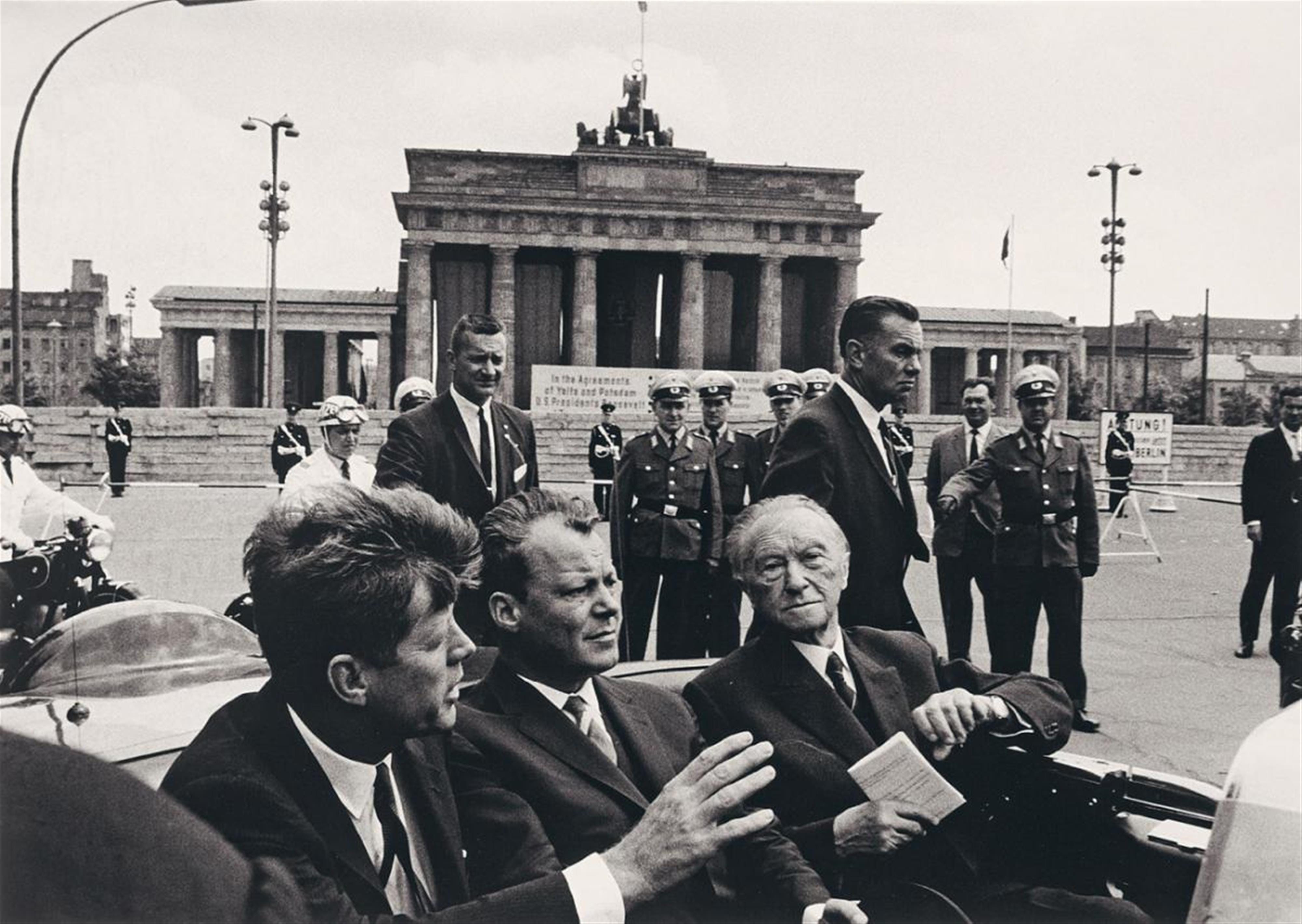
In order to illustrate the insufficiency of Transatlanticism, it is helpful to recap what allowed it to become such a fixture in the international system in the first place. Looking back at the most iconic speeches by US presidents on the subject, one is reminded not just of the vastly greater quality of political oratory and salesmanship compared with today, but also the fundamentally different world these statesmen inhabited. John F. Kennedy and Ronald Reagan were extremely gifted public speakers (who could rely on great speechwriters), but in addition to this, they governed a United States with fundamentally different geopolitical interests than those relevant in the 21st century. The United States didn’t just see the Soviet Union as a rival—it saw it as its most important rival on the planet, the desire to win the Cold War so great that it would even enter into an alliance with its erstwhile enemy in the Korean War, the People’s Republic of China. Yet today, the situation is exactly reversed, with China the most relevant adversary, while the conflict with Russia’s growing influence is seen by many as a mild annoyance at worst, rather than a true peer competitor.
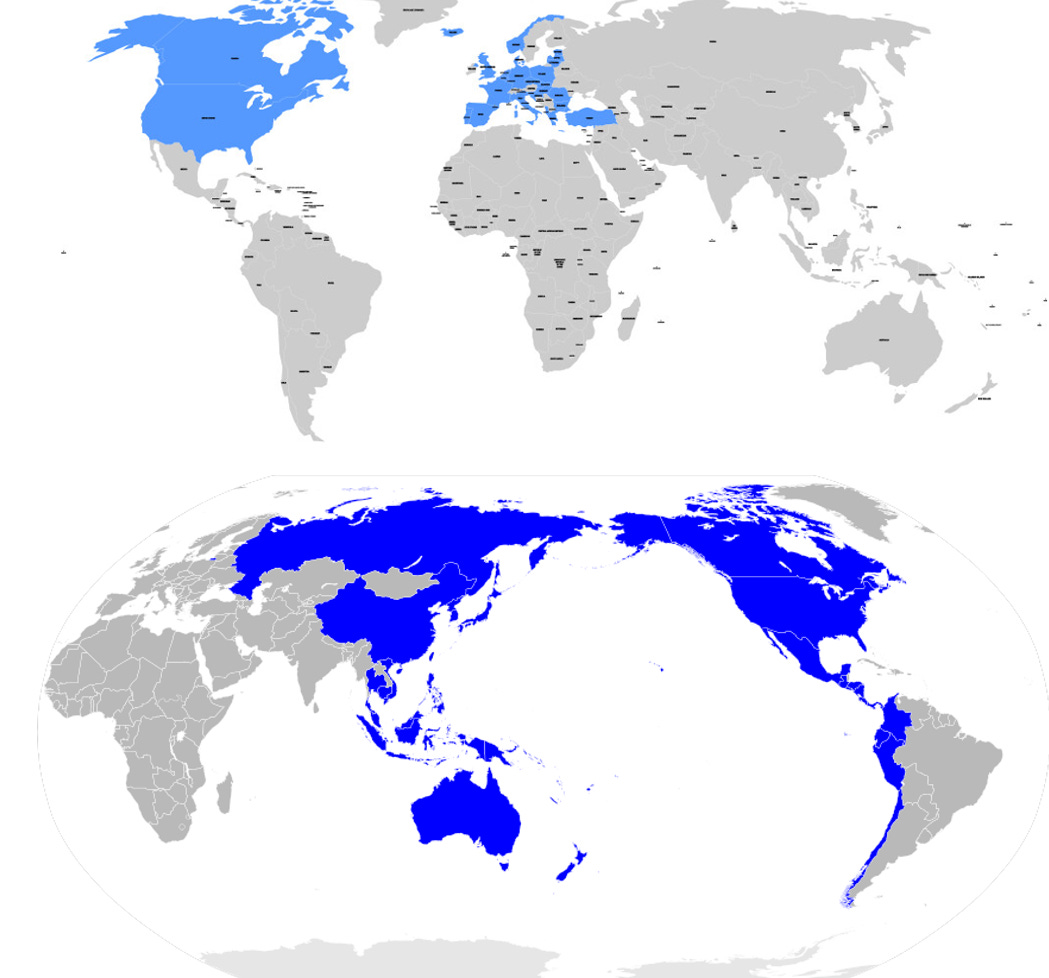
This distinct prioritization in the two historical periods is especially apparent when one considers the geopolitical strategy the US has pursued, according to realist scholars. The US has historically (especially so during the Cold War) acted as an offshore balancer, primarily active in three distinct regions of the world, in order of prioritization:
Europe
East Asia
Persian Gulf
The three theaters of engagement for the US have remained the same in the contemporary period, but the order of prioritization has changed too:
East Asia
Persian Gulf
Europe
This is especially relevant when one considers that the US military has traditionally maintained a two-theater force—that is to say, it has retained the capability to fight in two theaters simultaneously. Being priority number three to a power capable of defending two theaters is a risky bet at best, leaving Europe vulnerable to military threats without building up its own military.
One may counter that the relationship between Europe and the United States should be—and is—about more than cold-hearted geopolitical interests, that the two continents’ shared history of democracy and Western civilization binds them together beyond any petty strategic advantage. But the strong Transatlantic ties which defined the post-war era only developed during this period precisely because geopolitical interests and shared civilizational heritage aligned. The relationship managed to retain its importance because politicians could rest assured that stirring speeches and grand moral appeals, while awe-inspiring and emotionally appealing, weren’t necessary to uphold the alliance; selfish considerations were providing incentives to do so regardless.
When US administrations abandoned higher moral callings and instead practiced Realpolitik—when Kissinger opined that the US had no allies, only interests—European leaders had no reason to be perturbed. Alliances and interests perfectly aligned in the European theater during the Cold War. But today, no such certainty exists. Then, it made no difference whether Nixon and Kissinger or John F. Kennedy were running US foreign policy—but today, a vast gulf exists between a Biden and a Trump administration. In order for alliances essential for a nation’s defense to work, they must work unconditionally—but continued US support for the Old Continent today is very much conditional.
Unhappy in Their Own Way
In addition to geostrategic issues, the relationship is also detrimental to both societies’ sense of self. What applies to individual persons also applies to nations: in order to have strong relations with others, one needs a clear understanding of oneself. Yet the Transatlantic relationship increasingly resembles a case of arrested development—Europe less a partner than a child unwilling to move out of their parents’ house, unable to imagine itself facing the challenges of an inhospitable and uncaring world on its own.
This infantilization affects the Old Continent more immediately than the United States, yet it ultimately hurts the more powerful partner as well. Europe’s clinging to the United States allows it to avoid having to come to terms with its own weakness—the sense of belonging to the powerful entity of Western civilisation defers the realisation of the fundamental weakness of the states on the European continent. The weaker Europe gets, the more desperate this clinging becomes, as exemplified by the recent round of European proselytisation at the feet of the American president.
Despite the increasing ability of the US to humiliate Europe at will, the Transatlantic relationship ultimately isn’t to the benefit of America as well. America requires new allies in the Indo-Pacific, should it intend to maintain its geopolitical interests in the 21st century. Yet instead of taking the necessary steps to enable such alliances, the current administration seems content to exploit its traditional Transatlantic allies, using their weak position to force them to make humiliating trade concessions. At first, this may seem like an advantage—the ability to enforce lopsided deals possibly interpreted as a sign of national strength—yet this advantage vanishes in the medium term. Cannibalising the industry of old allies works as an effective deterrent to the gaining of new ones. The Achilles’ heel of US foreign policy in the 21st century has been its arrogance and belief that it can use its power to dictate the policies of other nations, a weakness which is reinforced by the unbalanced Transatlantic relationship.
At the current trajectory, Europe is set to become less a true ally and more of a permanent dependant, unable to assert its own will and interests due to the essential role of the US in its defence. Yet in order for an alliance to be useful, it needs to be predicated on a certain level of equality. Useful partnerships need each partner to be able to offer something to the other. But in the current Transatlantic partnership, the flow of ideas only ever goes one way—from the United States to Europe, and not the other way around. Culture, technology, fashion, and systems of economic organization start out in the US to be adopted by Europe later; a mutual exchange of ideas remains completely absent. As such, the creative possibilities of internationalism are completely unused. Transatlanticism today always yields the same ideas and policies, a profound malaise defining both sides of the Atlantic.
It is also important to remember that the Transatlanticism which defined the post-war era is very much a historical anomaly. Unique historical circumstances allowed this alliance to flourish during a specific historical era, the demands of the Cold War temporarily forcing Western societies on both sides of the Atlantic into an overarching alliance. But the challenges of the present day require distinct alliances and arrangements; the most important axis of engagement for the United States in the coming century is a Pacific one, while the nations of Europe are likely to have their future determined by their relations with Russia and the Middle and Near East. Instead of continuing to seek solutions in one another, the civilisations on both sides of the Atlantic need to open themselves to the wider world, defining themselves in relation to societies outside of the broader Western alliance. This isn’t to say that the US and the nations of Europe shouldn’t have any sort of relationship, or that their interests never align, but rather that their relationship with one another shouldn’t be the central international relationship of either society in this century.
Transatlanticism was always borne out of a fundamental weakness and lack of self-sufficiency on the part of Western European countries. It served its purpose of allowing the Continent to flourish despite this weakness, but today it serves to entrench rather than remedy this weakness, rendering the Old Continent a pathetic and increasingly useless appendage to a much more powerful society. At some point in the future, relations between the two societies may hopefully become closer again, their shared civilisational and institutional heritage binding them together once more. Yet in order for this to occur in a productive way, both need to first define their relations with the rest of the world and their understanding of themselves. To ensure that both societies will be able to collaborate as equal partners in the future is to ensure that they part ways today.